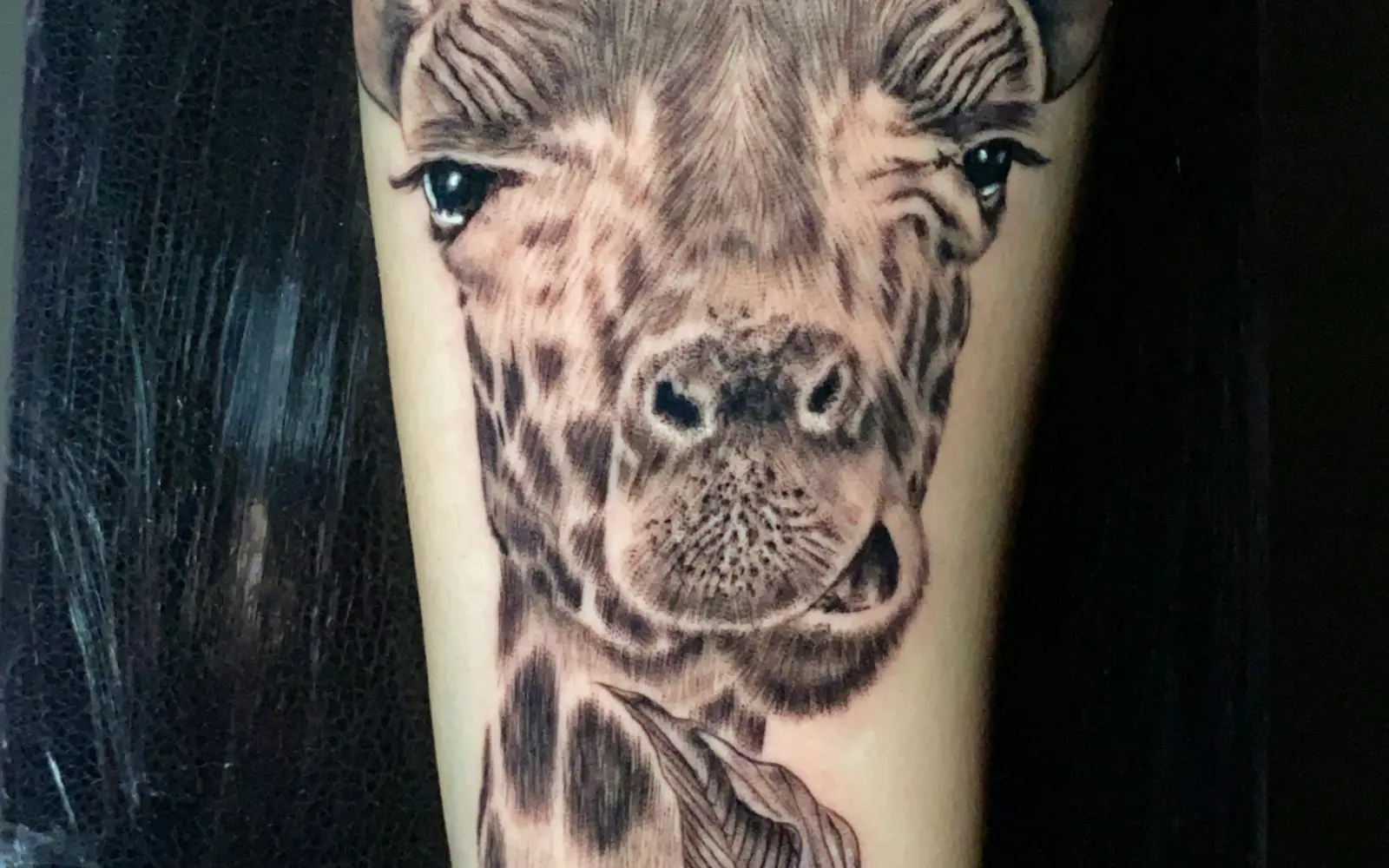
Animal tattoos are a subject, not a style: the animal you want and the way you want it rendered are two separate decisions. A wolf can be a photorealistic portrait, a bold traditional patch, or a clean geometric silhouette. Pet portraits lean realism because likeness is the whole point; bold wildlife thrives in traditional; stylized and symbolic creatures suit geometric or blackwork. Figure out what the animal needs to do (capture a specific face, make a striking statement, or carry a symbol) and the right style follows.
Pick this style if...
- People memorializing or celebrating a specific pet (realism captures likeness)
- Anyone wanting a bold, readable statement piece (traditional animals age beautifully)
- Symbolic or 'spirit animal' designs that suit geometric or blackwork treatment
Skip this style if...
- You want a tiny, fully realistic animal face (detail won't survive at small scale)
- You expect an exact pet likeness from an artist who doesn't specialize in realism
- You won't provide high-quality reference photos for a portrait
The rules of the style
- Match the style to the goal: realism and color realism for lifelike pets and wildlife, traditional or neo-traditional for bold and graphic animals, and geometric or blackwork for stylized, symbolic, or silhouette designs.
- For pet portraits, hire a portrait specialist and bring excellent photos. Sharp, well-lit, eye-level reference is everything. A general artist can do a great traditional fox but may not capture your dog's specific face; look hard at an artist's healed portrait work before booking.
- Size realistic animals generously, since eyes, fur, scales, and feathers carry the illusion, and that detail collapses when crowded into a small space. Bold traditional and geometric animals can go smaller because they rely on shape, not texture.
- Eyes make or break it: a tattooed animal lives or dies on its eyes. In a portrait, that's where you should scrutinize the artist's portfolio hardest; a technically clean body with dead eyes ruins the piece.
- Place it where the animal can pose naturally, letting the body's shape support the animal's form. A snake or fish wrapping a limb, a bird across the chest, or a cat curled on the shoulder reads better than a creature floating flat and disconnected.
- Color realism fades faster than black-and-grey: a vivid parrot or tropical fish will soften over the years more than a black-and-grey portrait. If long-term sharpness is the priority, consider black-and-grey realism.
Color palette
- Black
- Full grey-wash range
- Natural earth tones (secondary)
- Warm browns (secondary)
- Bold reds and greens (traditional) (secondary)
- Full-color realism palette (secondary)
Animal pieces run the full spectrum: crisp black-and-grey portraits, bold limited-palette traditional, or fully saturated color realism. Choose based on the animal and the style, not a fixed palette.
Aftercare for this style
Animal follows the same basic fresh-tattoo routine as other styles: follow your artist's instructions, keep the area clean, and protect the healed tattoo from UV exposure.