Tattoo Healing Stages Week-By-Week
Follow tattoo healing stages from the first 72 hours through peeling and deeper recovery, with clear signs of normal progress and when to seek medical care.
Most “is my tattoo infected?” panic is actually just week 2. Here’s what’s normal.
How long does a tattoo take to heal?
A tattoo heals in overlapping surface and deeper-skin phases. The visible peeling and discomfort commonly settle over the first few weeks, while the skin can continue changing after it looks closed. A small clinical aftercare study reported the common expectation that tattoo healing completes in roughly 2–3 weeks, but timing varies by placement, tattoo size, technique, and individual skin; see the peer-reviewed study and its cited aftercare standard.
The single most useful thing to know: nothing you see in the first month is what the tattoo will look like at month six. Do not judge the piece, and do not book a touch-up, until at least week 6.
Healing timeline at a glance
| Stage | Timeline | What’s happening | What you’ll see |
|---|---|---|---|
| 1. Open wound | Day 0–3 | Plasma weeping, tissue swelling | Redness up to ~1 in around the tattoo, glossy surface |
| 2. Drying / itch | Day 4–7 | Epidermis dries and tightens | Skin feels stiff, mild itch begins |
| 3. Active peel | Day 7–14 | Top epidermal layer sheds | Flakes, patchy look, peak itch |
| 4. Cloudy phase | Day 14–28 | New epidermis maturing over ink | “Silver skin” haze, muted colors |
| 5. Reveal | Week 4–6 | Waxy layer clears | True saturation returns |
| 6. Deep remodel | Month 2–6 | Dermal collagen reorganizes | Fine lines sharpen, colors settle |
Use the table to sanity-check anything unusual against the stage you’re in. Redness at day 2 is expected. Redness at day 12 that’s growing is not.
Day 0–3: Fresh and angry
The tattoo is an open wound. Expect:
- Redness around the tattoo (normal, up to 1 inch out)
- Plasma weeping (clear/yellowish, not pus)
- Mild swelling and warmth
- The design looks glossy and saturated
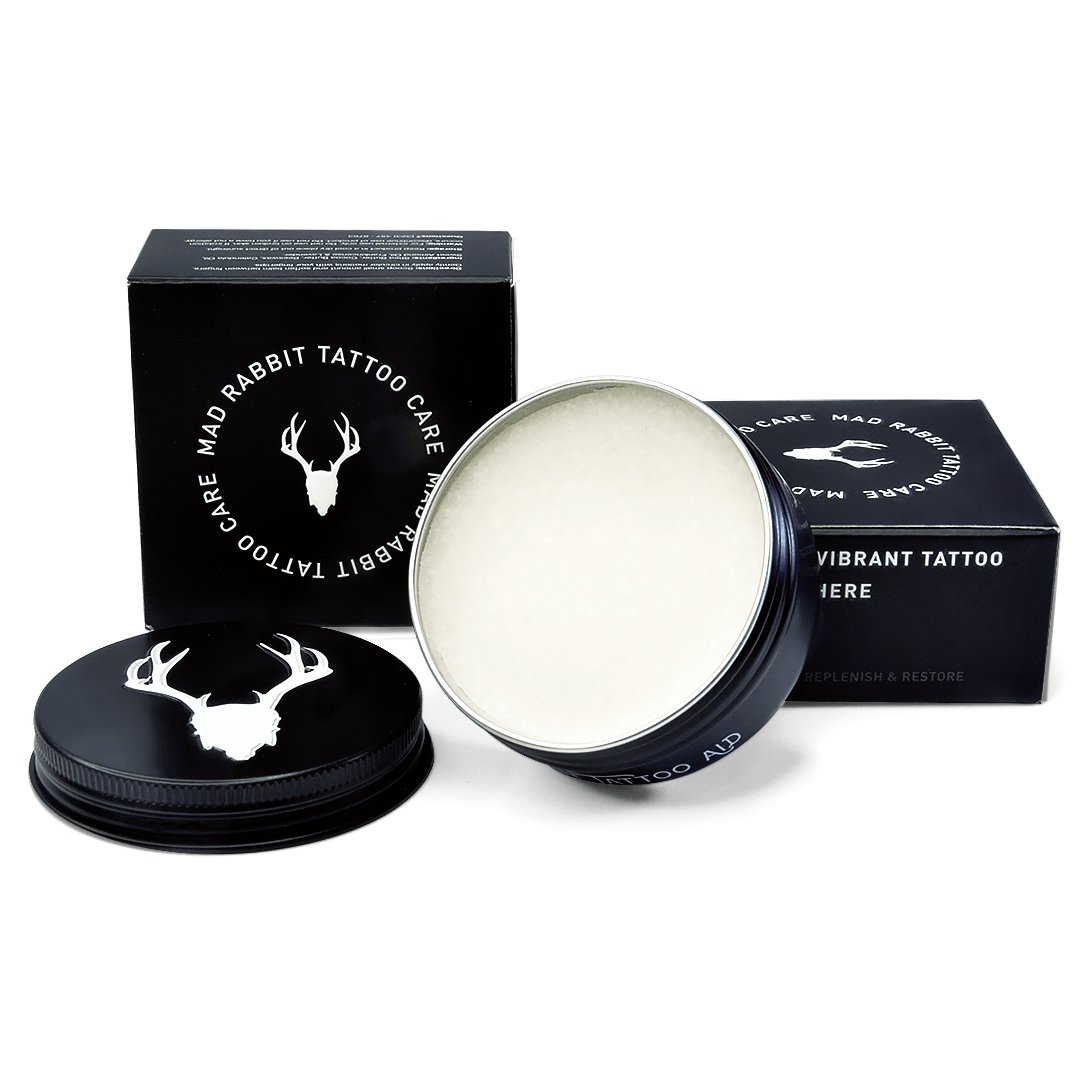
Care: Wash 2–3x daily, apply very thin balm. Do not let it scab up by skipping care: plasma dries into thick scabs that take ink with them.
Day 4–7: The itch begins
- Surface starts drying and tightening
- Itching is normal and maddening, so do not scratch
- Light flaking may start
- Colors start looking faded (this is fine, the flaking layer is just top skin)
Care: Keep moisturizing. If you used a second-skin bandage, your artist will tell you when to remove it (typically day 3–5). A second piece is sometimes applied.
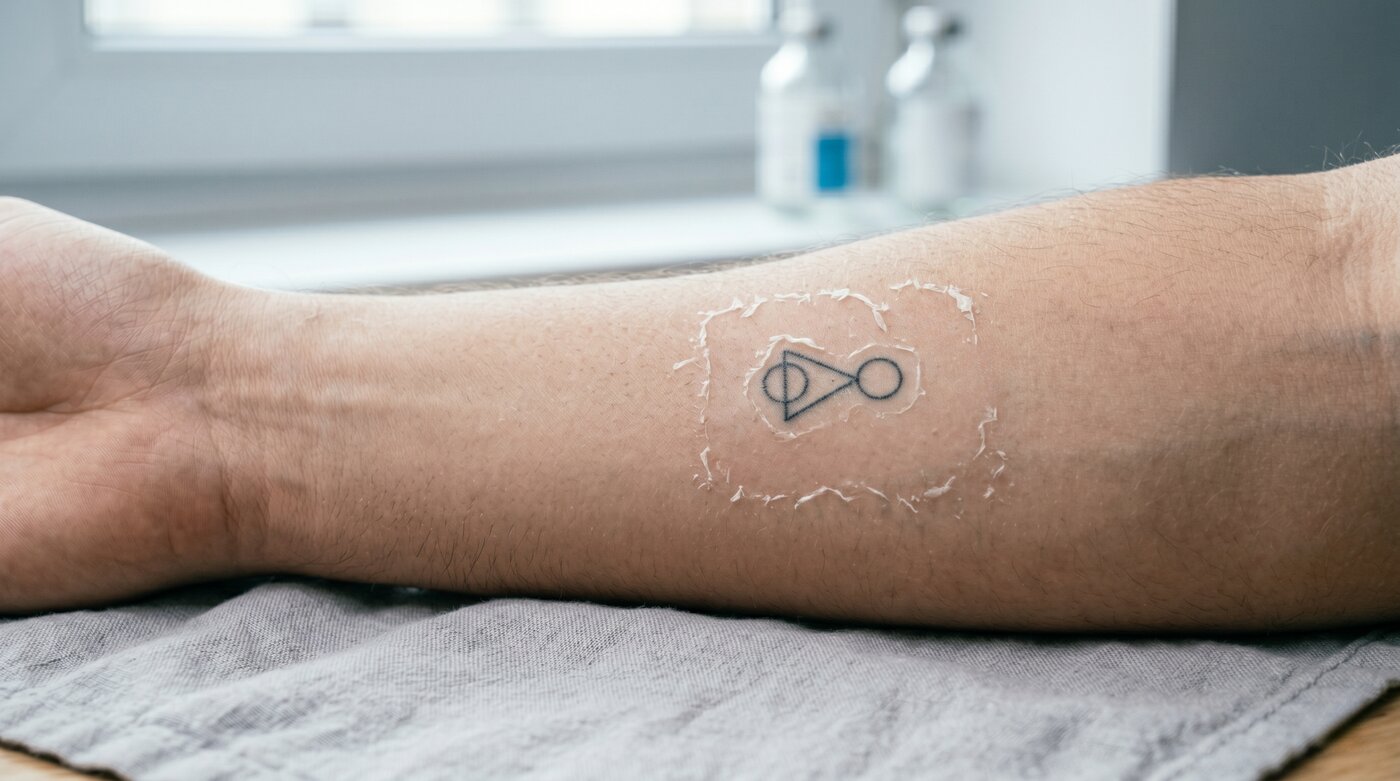
Day 7–14: Peeling and panic
This is the stage where everyone thinks they’ve ruined their tattoo.
- Thin peeling flakes fall off, sometimes with visible ink
- The tattoo looks patchy, dull, or “missing” in spots
- Itching peaks
Do not pick. The flakes you see falling are dead skin that was on top of your tattoo, not the ink itself. The pigment is in the dermis below, which you cannot see yet because the epidermis is still regenerating.
Day 14–28: Dull phase
- Surface is smooth but a cloudy/waxy layer is still covering the tattoo
- Colors look muted vs. what you remember from day 1
- The artist cannot touch it up at this stage: it’s not done healing
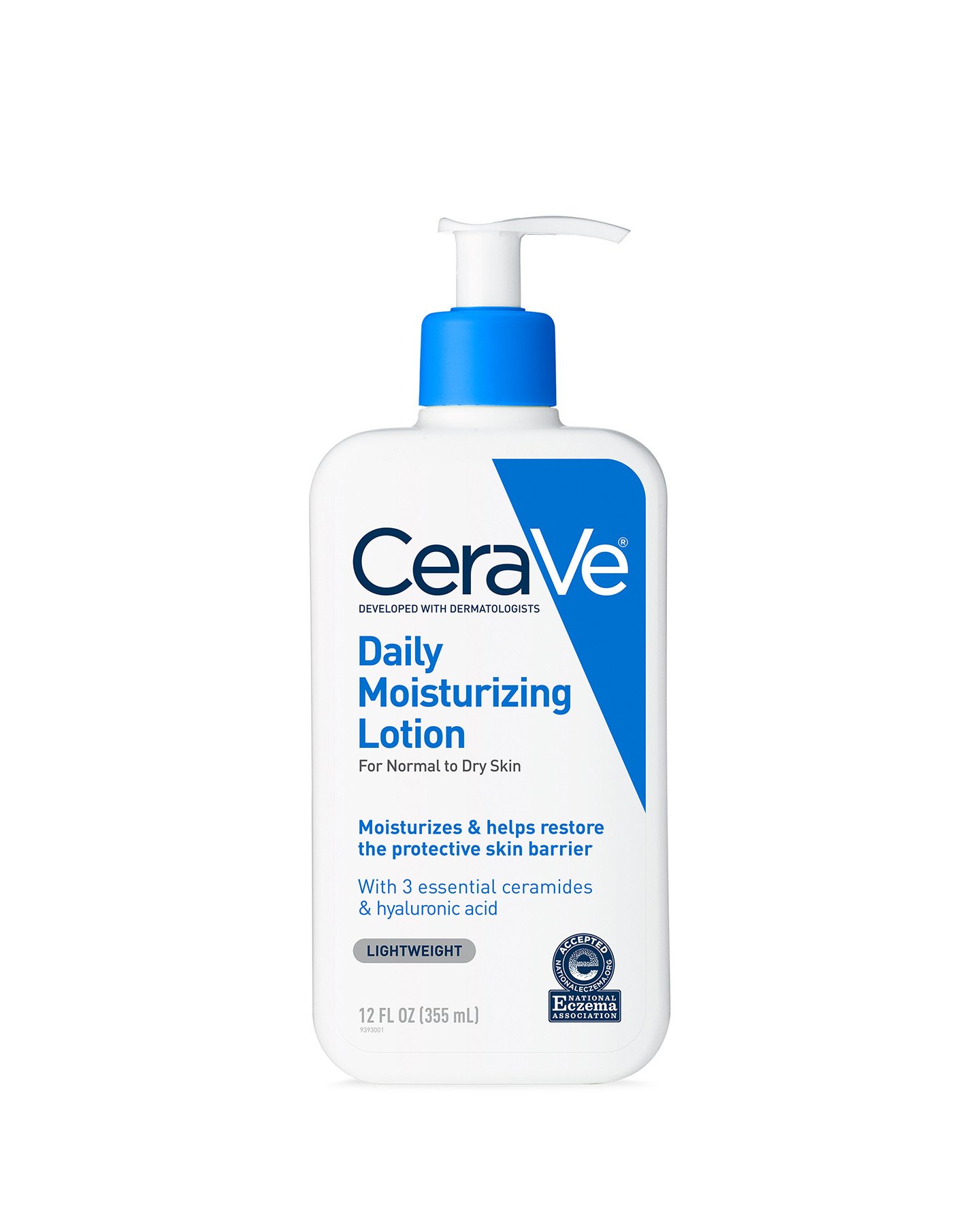
Care: Switch to plain moisturizer (CeraVe is our pick), keep it out of prolonged sun.
Week 4–6: Final reveal
The waxy layer finishes shedding and the true healed saturation emerges. This is the tattoo you’ll live with, for now.
- If there are patchy spots, note them and request a touch-up after week 6
- Most reputable artists offer one free touch-up at the 6–8 week mark, provided you followed aftercare
Month 2–6: The deep settle
This stage almost never gets talked about because it’s invisible, but it’s where a tattoo goes from “healed” to “settled.” The dermis remodels its collagen matrix around the ink particles, so:
- Fine lines tighten: hairline linework that looked slightly fuzzy at week 4 usually sharpens by month 3.
- Colors deepen. Black looks blacker; red and blue lose the pastel haze.
- Blowouts (ink pushed too deep) become visible if they exist: a slight bluish blur next to a line. There is no fix for a blowout other than cover-up or laser.
Sun exposure during this window fades a tattoo faster than at any point in its life. Why tattoos fade is mostly a UV story: mineral SPF 30+ from week 4 onward is the single highest-ROI thing you can do for long-term saturation.
How second-skin bandaging changes the timeline
If your artist applied a Saniderm-style adhesive film, the visible timeline compresses. You skip the exposed weeping phase (it happens under the film) and typically emerge at day 3–5 already past the “angry” stage. The peel phase still happens, just later and lighter; see our Saniderm peel day-by-day breakdown for what to expect under and after the film. Total healing time to full dermal settle is the same 3–6 months; only the surface phases are accelerated.
Does tattoo healing look different on darker skin tones?
Redness and inflammation read differently across skin tones. On darker skin, “redness” often presents as a slightly darker purple-brown halo rather than pink or red, and swelling is a more reliable early-infection signal than color change alone. Post-inflammatory hyperpigmentation (a temporary darkening of the skin around the tattoo) is more common on Fitzpatrick IV–VI skin and usually resolves in 2–4 months. If you’re not sure whether what you’re seeing is normal, photograph it in the same light on consecutive days and compare: direction of change (getting better vs. worse) matters more than the snapshot.
When should I call a doctor about my healing tattoo?
See a doctor, not your artist, if:
- Red streaks spreading beyond the tattoo (lymphangitis)
- Fever
- Pus (yellow-green, thick, foul-smelling) vs. plasma (clear, thin, odorless)
- Hard, hot swelling that’s worsening at day 5+
- Pain that’s increasing past day 3
Do not estimate your personal risk from a generic percentage. If redness spreads, pain worsens, pus appears, or fever or chills develop, the American Academy of Dermatology advises prompt medical care. See our tattoo infection signs guide for a side-by-side of normal vs. escalating symptoms.
What to actually do at each stage (short version)
- Week 1: Wash 2–3x daily with fragrance-free soap. Thin balm layer. Sleep on clean sheets.
- Week 2: Keep moisturizing. Do not pick. Do not swim. Do not shave the area.
- Weeks 3–4: Switch to plain unscented lotion. Ease back into gym. Still no direct sun.
- Weeks 4–6: Book a touch-up if needed. Start daily mineral SPF 30–50.
- Month 2–6: Nothing but sunscreen. The tattoo is doing its own work below the surface.
If any single stage looks or feels dramatically worse than the day before (not just different, worse), that’s the trigger to call your artist (for aftercare questions) or your doctor (for suspected infection). Everything else is just healing on schedule.
Tattoo Balm