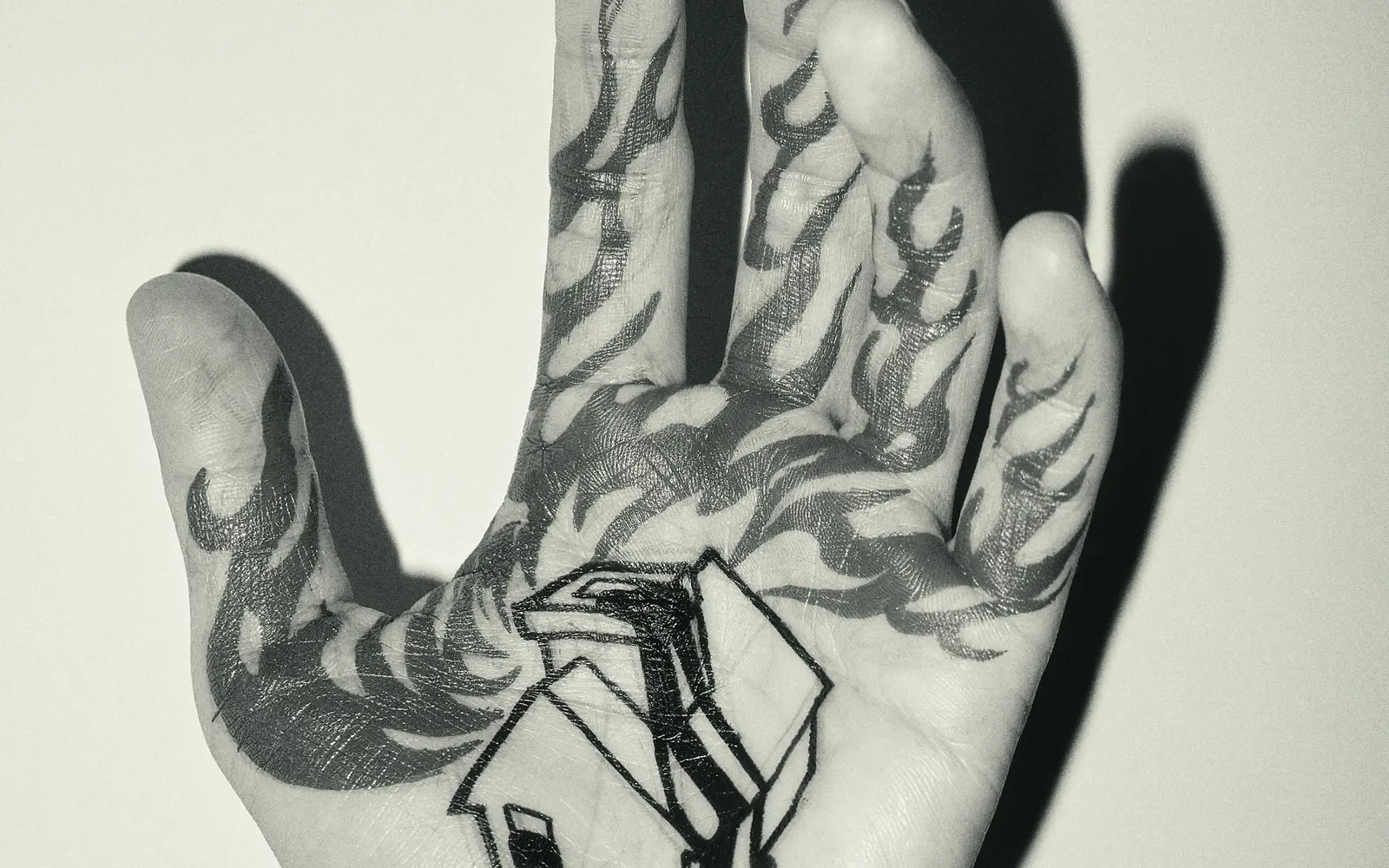
3D tattoos are an illusion built entirely out of shadow and highlight. There's nothing physically raised on your arm: the artist paints carefully placed cast shadows, soft gradients, and bright highlights so your eye reads the design as sitting on top of the skin, pressing into it, or lifting off it. Done well, a 3D piece can stop people in their tracks: a torn-skin window, a button you want to press, a spider that looks like it's about to crawl. The catch is that the whole trick lives in the contrast. As ink softens and lightens over years, the shadows that sell the depth fade first, and a once-convincing 3D piece can flatten into an ordinary tattoo. The effect is also angle-dependent, popping from the viewpoint the artist designed it for and reading flatter from other angles. This is a style where a genuinely skilled shader is non-negotiable.
Pick this style if...
- Flat, broad placements like the forearm, calf, or upper back where the illusion reads cleanly
- People who want a true conversation-piece tattoo
- Fans of realism and biomechanical work who want extra visual punch
Skip this style if...
- You want a tattoo that looks the same crisp way for 20+ years with minimal touch-ups
- You're booking a budget artist: weak shading kills the entire effect
- You want it on a highly curved or constantly-flexing spot that distorts the perspective
The rules of the style
- The depth is an illusion, not real texture: every bit of the 3D effect comes from painted cast shadows and highlights, so the shading work has to be flawless or the trick collapses.
- Contrast is the engine: a convincing 3D piece needs a wide value range from near-black shadows to bright skin-tone highlights; muddy mid-tones read flat.
- Design for a viewing angle: the illusion is strongest from the perspective the artist composed it for and weakens from other angles, so placement and orientation matter as much as the drawing.
- Plan for fading: the deep shadows that create the depth fade faster than the rest, so build in extra contrast up front and budget for a touch-up every several years to keep the effect alive.
- Match the design to the body part: flat or gently curved areas hold the illusion; placements that flex or bend hard will distort the perspective and break it.
- Skill over gimmick: choose an artist with a real realism or shading portfolio, not just a flashy reference photo, because 3D is unforgiving of weak technique.
Color palette
- Black
- Greys (full value range)
- Skin-tone highlights (secondary)
- Optional realistic color for the subject (secondary)
The 3D effect relies entirely on value contrast and the placement of shadow and highlight, not on any special ink. Strong black-and-grey shading is the foundation; color is optional decoration on top.
Aftercare for this style
3D follows the same basic fresh-tattoo routine as other styles: follow your artist's instructions, keep the area clean, and protect the healed tattoo from UV exposure.