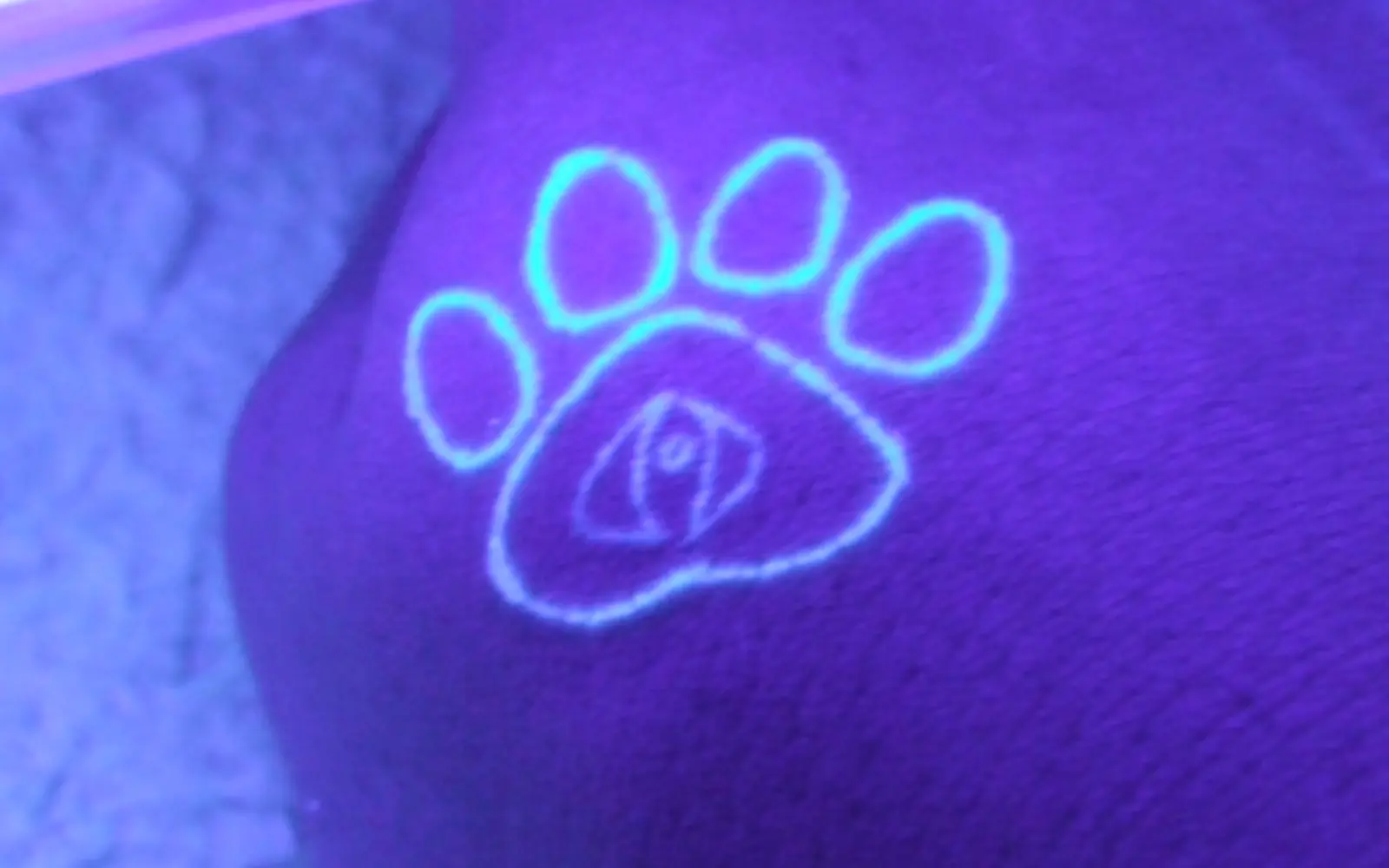
UV (blacklight) tattoos use ink that's faint or nearly invisible in normal light but fluoresces brightly under ultraviolet light, making a hidden design 'switch on' at a blacklit bar, club, or party. It's a genuinely cool effect with obvious appeal, but it comes with real caveats that reputable artists are upfront about. UV inks are a niche product with far less long-term safety and longevity data than standard tattoo pigment. Historically some 'invisible' UV formulas were poorly studied, and many serious artists now use UV inks that are at least visible (a soft pastel) in daylight rather than fully invisible ones. Because they're applied with less black pigment, UV tattoos can be harder to execute cleanly, fade or shift unevenly, and a few people report more skin sensitivity. Many artists recommend a patch test before committing. A common middle path is to add UV-reactive accents to a normal tattoo rather than doing an entirely UV piece. Note that true 'glow-in-the-dark' tattoos that glow on their own in full darkness essentially don't exist; these only react under an actual UV/blacklight source.
Pick this style if...
- Subtle daytime designs that reveal a hidden layer under blacklight
- Nightlife, festival, and rave contexts where blacklight is common
- UV-reactive accents added to an otherwise standard tattoo
Skip this style if...
- You want a tattoo with a long, well-documented safety and longevity track record
- You have sensitive skin or react to new products without testing first
- You expect it to glow on its own in the dark: it only fluoresces under a UV source
The rules of the style
- UV ink only reacts under a blacklight source: there is no true 'glow-in-the-dark' tattoo; without an actual UV light, the design stays subtle or invisible.
- Long-term data is limited: UV and fluorescent pigments have far less safety and longevity research than standard tattoo ink, so go in informed and choose an artist who is honest about that.
- Patch-test first: reputable artists commonly recommend a small test spot, since some people report more irritation or sensitivity with UV inks than with conventional pigment.
- Prefer visible-when-off formulas: fully 'invisible' UV inks are the least studied and hardest to place accurately; many pros now use UV inks that read as a soft pastel in daylight.
- Expect it to be harder to apply and to age unevenly: with little or no black pigment to anchor the work, UV tattoos can be trickier to execute cleanly and may fade or shift more than standard ink.
- Consider accents over full pieces: adding UV-reactive highlights to a conventional tattoo is a lower-risk way to get the effect than committing to an entirely UV design.
Color palette
- UV-reactive blue
- UV-reactive green
- UV-reactive pink/magenta
- UV yellow (secondary)
- UV orange (secondary)
- Standard ink for a visible base layer (secondary)
These colors only fluoresce vividly under a UV/blacklight source; in normal daylight they appear faint, pastel, or invisible. The 'neon' glow is the pigment fluorescing, not a special light-emitting property, and nothing glows without UV light present.
Aftercare for this style
UV / Blacklight follows the same basic fresh-tattoo routine as other styles: follow your artist's instructions, keep the area clean, and protect the healed tattoo from UV exposure.